

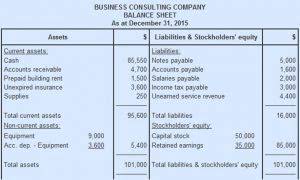
Knowing a company’s free cash flow enables management to decide on future ventures that would improve shareholder value. Additionally, having positive free cash flow indicates that a company is capable of paying its debts. Conversely, negative free cash flow suggests a company may need to raise money. Companies can also use free cash flow to expand business operations or pursue other investments or acquisitions. It is possible to derive capital expenditures (CapEx) for a company without the cash flow statement. To do this, we can use the following formula with line items from the balance sheet and income statement.
How Does Cash Flow Differ From Profits?
Some more conservative lenders will adjust EBITDA accordingly when calculating DSC for CAPEX-heavy industries. Most commercial banks and equipment finance firms want to see a minimum of 1.25x but strongly prefer something closer to 2x or more. Many small and middle market commercial lenders will set minimum DSC covenants at not less than 1.25x.
What is the Internal Rate of Return Used For?
Operating activities is the cash flow generated by the production and sale of the goods or services of a business. Cash flow formulas include free cash flow, operating cash flow, and discounted cash flow. Nivedita Kaushik brings strong expertise in business operations and expense workflow optimization. At Happay, she writes to help companies simplify expense processing and improve financial accuracy. Her articles focus on real-world best practices and practical tips for efficient expense management. In conclusion, cash flow is a vital financial concept that encompasses the movement of cash in and out of business.
- While net income reflects accounting profit after all revenues and expenses, CFO focuses on actual cash generated from operations.
- Financing activities cash flow is cash inflow and cash outflow relating to a company’s creditors and business owner or owners.
- Once the internal rate of return is determined, it is typically compared to a company’s hurdle rate or cost of capital.
- Cash flow refers to the inflow and outflow of cash and cash equivalents.
- To do this, you must start by identifying your past inflows and outflows.
- Below, we will walk through each of the steps required to derive the FCF Formula from the very beginning.
Resources
Critics — such as Warren Buffett — caution against relying too heavily on EBITDA because it ignores critical costs like depreciation, which reflect the true wear and tear on a company’s assets. Understanding your CFO is critical for evaluating Cash Flow Statement the financial health of your business. It provides insights into whether your core operations are generating enough cash to sustain ongoing activities. A positive CFO indicates that your revenues are sufficient to cover operational costs, while a negative CFO raises concerns about cash flow sufficiency. Free Cash Flow can be easily derived from the statement of cash flows by taking operating cash flow and deducting capital expenditures. Cash flow is the increase or decrease of money in a business, institution, or person.
Supercharge your skills with Premium Templates
Both metrics play important roles in evaluating a business’s financial health and decision-making. cash flow meaning Reporting the statement typically involves categorizing cash flows into operating activities, investing activities, and financing activities. It is an important indicator of how much money the company has available to both cover its running costs and invest in the future. A positive cash flow means that the company is generating more revenue than expenses and a negative cash flow means that the company is spending more money than it is taking in. Therefore, it is important that companies closely monitor their cash flow and adjust their strategies accordingly to achieve positive cash flow. This enables the company to invest in its future and increase its profitability and competitiveness.
They differ from profit and loss accounts (which show profitability) and balance sheets (which provide a snapshot of your business value at a particular moment). Together, these are useful indicators of the health of your business, for you and for potential funders and investors. A cash flow statement tracks how much money your business brought in over a set period, and how much was spent. The figure at the bottom of the statement is your total net cash flow. If it is positive, cash flow increased over the period; if it’s negative, more cash was spent than received. It’s tough to compare cash flow and profit because it’s apples and oranges.
What Causes Cash Inflows?
- While it’s agreed that profitability is desired over time, a business will never get to grow without a solid amount of cash flow.
- With the right tools, you can simplify cash flow management and your overall accounting processes.
- Instead of discovering a problem when the bank balance is already low, you see it forming weeks in advance.
- Working capital refers to funds required for day-to-day operations of a business, mainly invested in current assets (concept).
- Cash Flow is an important parameter to measure the success of a company.
Trend analysis is a type of finance ratio analysis used to evaluate a company’s financial performance by comparing data over multiple periods to identify consistent patterns, movements, or tendencies. We advise using EBITDA alongside other financial metrics like net income and cash flow to assess a company’s profitability and cash position. Many private equity firms and investment analysts prefer EBITDA because it highlights the earnings a company generates from its core business, without noise from financing or accounting policies. EBITDA stands for Earnings Before Interest, Taxes, Depreciation, and Amortization and is a financial metric used to evaluate a company’s operating performance.

The operating cash flow ratio is another liquidity ratio that calculates the number of https://soltecsolar.com/is-accounting-hard-to-learn/ times a company can pay off its current liabilities with the cash generated in a given period. Most finance professionals first encounter cash flow through the indirect method because it’s the standard format used in financial statements. Indirect cash flow starts with net income and then adjusts for non-cash items like depreciation and changes in working capital accounts such as accounts receivable, accounts payable, and inventory.